
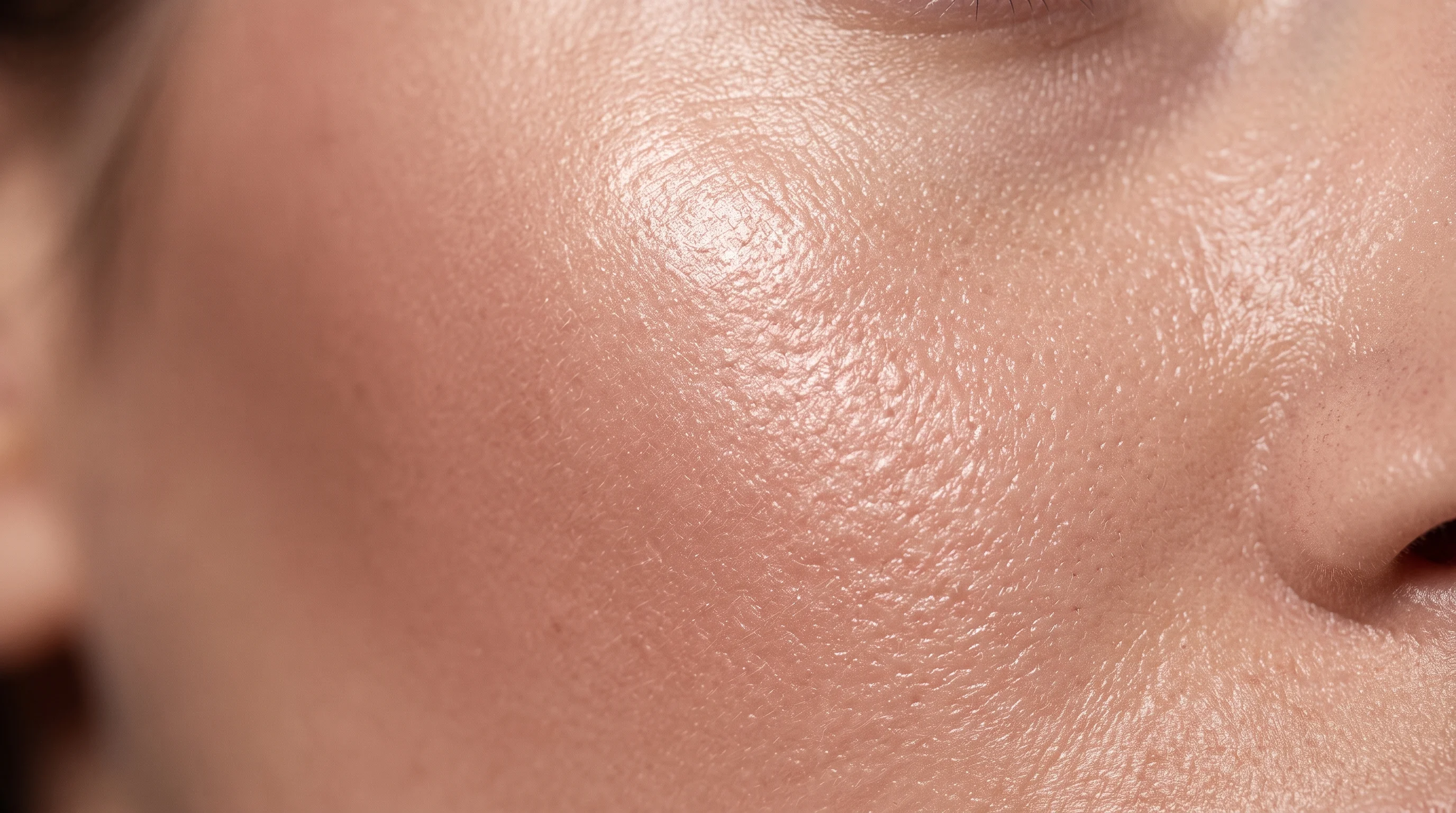
Does your face burn the second you apply your go-to moisturizer? Or does your skin feel uncomfortably tight right after washing your face? No, it's not in your head: your skin barrier is screaming for help.
Behind that constant tightness, burning, or sudden breakouts lies a single culprit: a compromised skin barrier and an imbalanced microbiome.
What exactly is the skin barrier? Bricks and mortar
Imagine the outermost layer of your skin as a protective brick wall:
- The Bricks (Corneocytes): Ultra-resilient cells packed with keratin that shield you from friction and physical stress.
- The Mortar (Lipid Matrix): The biological glue holding the bricks together, made of Ceramides (50%), Cholesterol (25%), and Free Fatty Acids (15%).

When that lipid mortar degrades, vital moisture escapes and harmful bacteria enter without permission.
30% to 50%
of patients with severe atopic dermatitis carry a mutation in the filaggrin gene, the essential protein responsible for keeping the skin barrier hydrated.
💡 The 3:1:1 Ratio Secret
For your skin's "mortar" to remain impenetrable, ceramides, cholesterol, and fatty acids must exist in a precise 3:1:1 ratio. When selecting repair creams, choose biomimetic formulas that respect this natural ratio.
The acid mantle and your microbiome: Your fourth dimension of protection
Above this brick wall lies an invisible film of water and sebum called the acid mantle (pH 4.5 to 5.5).
This acidic environment neutralizes harmful bacteria while nourishing your skin microbiome: millions of friendly bacteria that fight for your skin daily.

Beneficial bacteria like Staphylococcus epidermidis feed on natural lipids and produce antimicrobial peptides. Using harsh alkaline bar soaps destroys the acid mantle and kills your protective flora.
ℹ️ Dysbiosis: When Good Bacteria Die
Dysbiosis occurs when you disrupt your microbiome through over-washing or harsh chemicals. Without good bacteria to protect you, pathogens proliferate, the immune system reacts, and inflammation or breakouts erupt.
What is destroying your skin barrier every day?
Your skin withstands daily stress, but it has limits:
- Dry HVAC Indoor Air & Pollution: Dry heated air strips water from skin cells, accelerating Transepidermal Water Loss (TEWL) and causing micro-cracks.
- Aggressive Cleansers (Sulfates): Heavy surfactants like SLS or SLES dissolve lipid matrix like dish soap dissolves grease.
- Over-Exfoliation: Using chemical acids or scrub brushes too frequently strips protective layers before they can regenerate.

✅ Warning Signs: Is Your Barrier Broken?
Saved locally in your browser — mark at your own pace.
Step by step: How to repair your skin barrier today
The golden rule of barrier repair is simple: stop damaging it.
- Atraumatic Cleansing: Avoid hot water and foaming soaps. Opt for Syndet cleansers or physical microfiber technology (like Laska Mini) that lifts impurities via capillary action without removing vital lipids.
- Lipid Replenishment: Apply creams rich in ceramides, hyaluronic acid, and squalane.
- Topical Prebiotics: Choose skincare formulated with inulin to nourish beneficial bacteria and restore microbiome balance.

🧠 Skin Diagnostic Quiz
What is the clearest symptom that your skin barrier has lost its lipid mortar?
The acne myth: Why over-washing worsens breakouts
If you have oily or acne-prone skin, it's easy to fall into the trap of washing your face three or four times a day to "dry out" pimples.
That's a major myth! Over-washing strips protective ceramides, forcing your skin to produce double the oil as a defense mechanism, clogging more pores and worsening breakouts. To heal acne, you must repair your barrier first.