
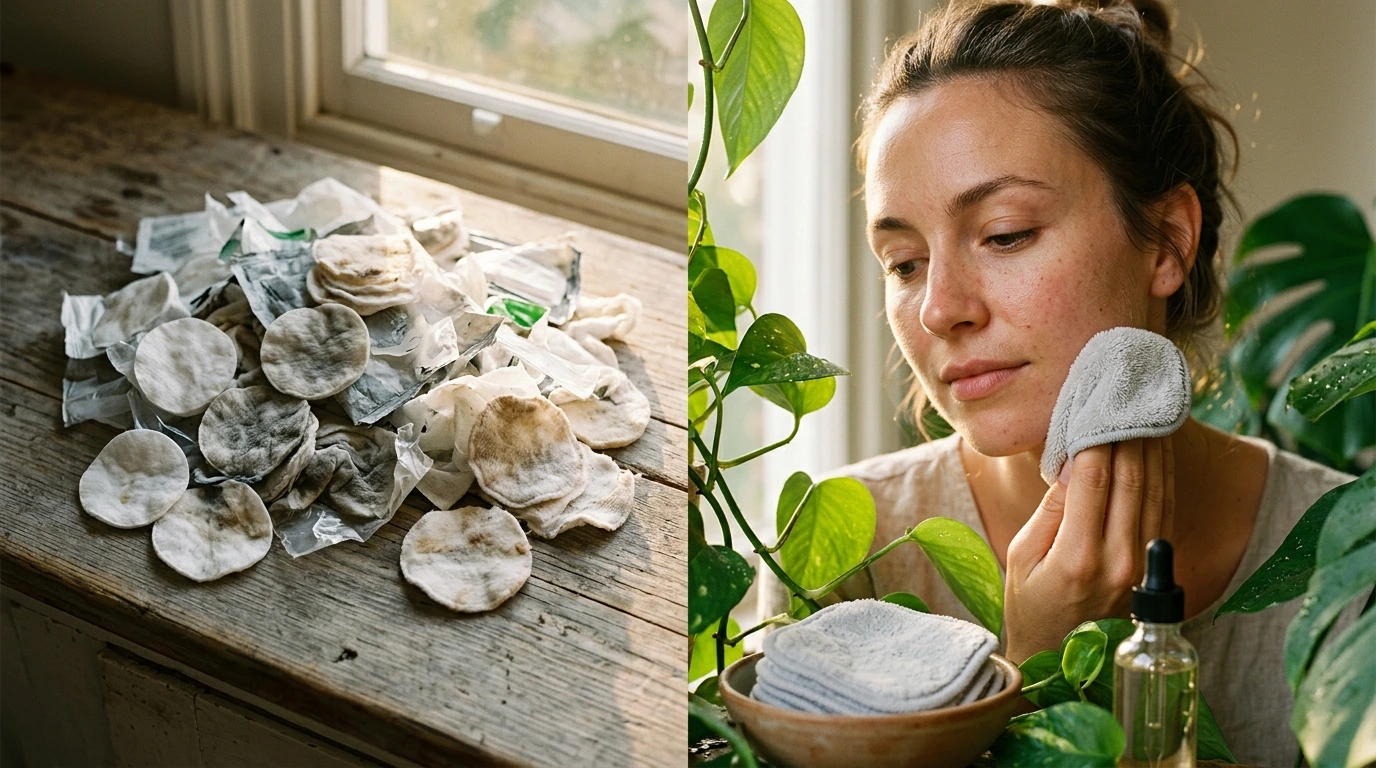
You use two or three cotton pads every evening to remove makeup or apply toner. Sometimes, when exhausted, you reach for a single-use wet wipe and toss it straight into the bathroom trash. It seems like a harmless daily habit, but have you ever considered how much waste builds up in your bathroom over a single year?
The traditional beauty industry has normalized disposability: use for ten seconds and throw away. Yet the environmental and dermatological cost of this habit is staggering.
The Hidden Toll of Industrial Cotton: Water, Pesticides, and Pollution
There is a widespread myth that because cotton is a plant, single-use facial pads are 100% eco-friendly. The reality is vastly different:
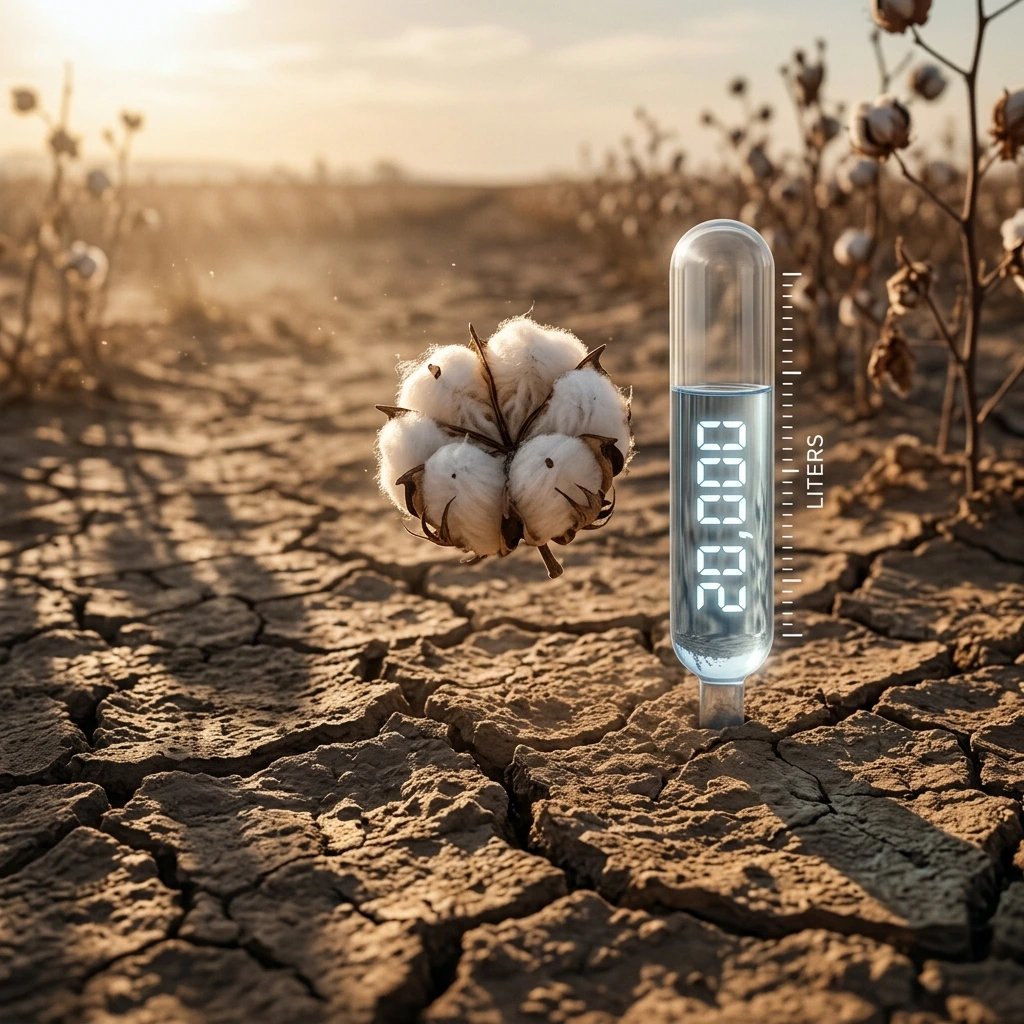
- Extreme Water Footprint: Producing just one kilogram of industrial cotton requires 10,000 to 20,000 liters of water, depleting freshwater reserves in vulnerable agricultural ecosystems.
- Heavy Pesticide Use: Cotton crops occupy barely 2.4% of global arable land, yet consume 24% of global insecticides and 11% of synthetic agricultural pesticides.
- Chlorine Bleaching: To achieve pristine white pads, raw cotton undergoes chemical chlorine treatment that releases toxic dioxin byproducts into freshwater systems.
Daily Water Footprint:
Using 3 disposable cotton pads daily indirectly consumes over 1,500 liters of water per month solely in agricultural crop irrigation.
💡 The Disposable Fallacy
Even pads labeled 100% cotton frequently contain synthetic plastic binding resins to prevent tearing during facial scrubbing, blocking clean natural composting.
Makeup Wipes: The Microplastic Trap and Environmental Clogging
While cotton pads drain freshwater reserves, disposable makeup wipes are an ecological crisis for aquatic life:
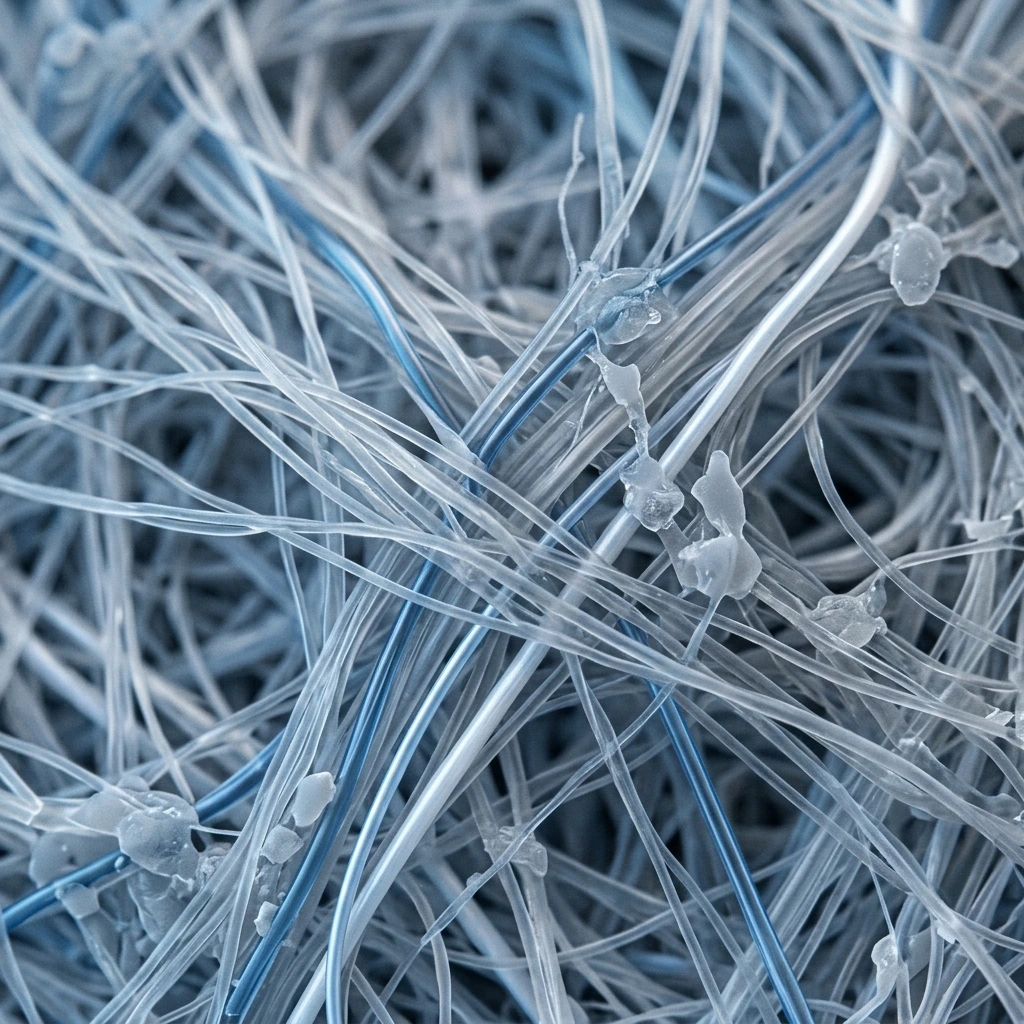
- Indestructible Synthetic Fibers: The vast majority of retail wipes are woven from polyester and polypropylene blends. They are not paper; they are woven plastic.
- 500 Years in Ecosystems: A single disposable wipe takes up to five centuries to break down into tiny microplastic particles ingested by marine life.
- Skin Irritants: To remain moist in packaging for months, wipes require elevated concentrations of synthetic preservatives, alcohol, and harsh surfactants that disrupt the skin barrier.
ℹ️ What Are Fatbergs?
Millions of wipes flushed down toilets merge with grease and industrial debris in municipal sewers, forming massive non-biodegradable blockages that damage urban water infrastructure.
The Sustainable Alternative: Biomechanical Cleansing with UpPoly Technology
True conscious beauty transforms your bathroom into a Zero Waste space without compromising clinical efficacy or gentle care for sensitive skin.

This is where advanced Japanese UpPoly microfiber engineering (featured in the Laska Mini Set) changes everything:
- Reusable for Months: A single microfiber set replaces over 1,000 disposable cotton pads or wet wipes, eliminating 100% of daily plastic skincare trash.
- Water Only Required: Capillary force from split micro-fibers traps oxidized sebum, heavy makeup, and urban pollution mechanically, bypassing plastic micellar bottles.
- Quick Eco-Friendly Care: Rinses clean in ten seconds under warm water with mild soap, ready to reuse the next morning.
✅ Bathroom Eco-Check: Is It Time to Go Zero-Waste in Your Skincare?
Saved locally in your browser — mark at your own pace.
Japanese Microfiber vs. Disposable Cotton: The Science of Friction
Beyond protecting planetary resources, switching from single-use cotton to multi-layered microfibers protects your skin texture:
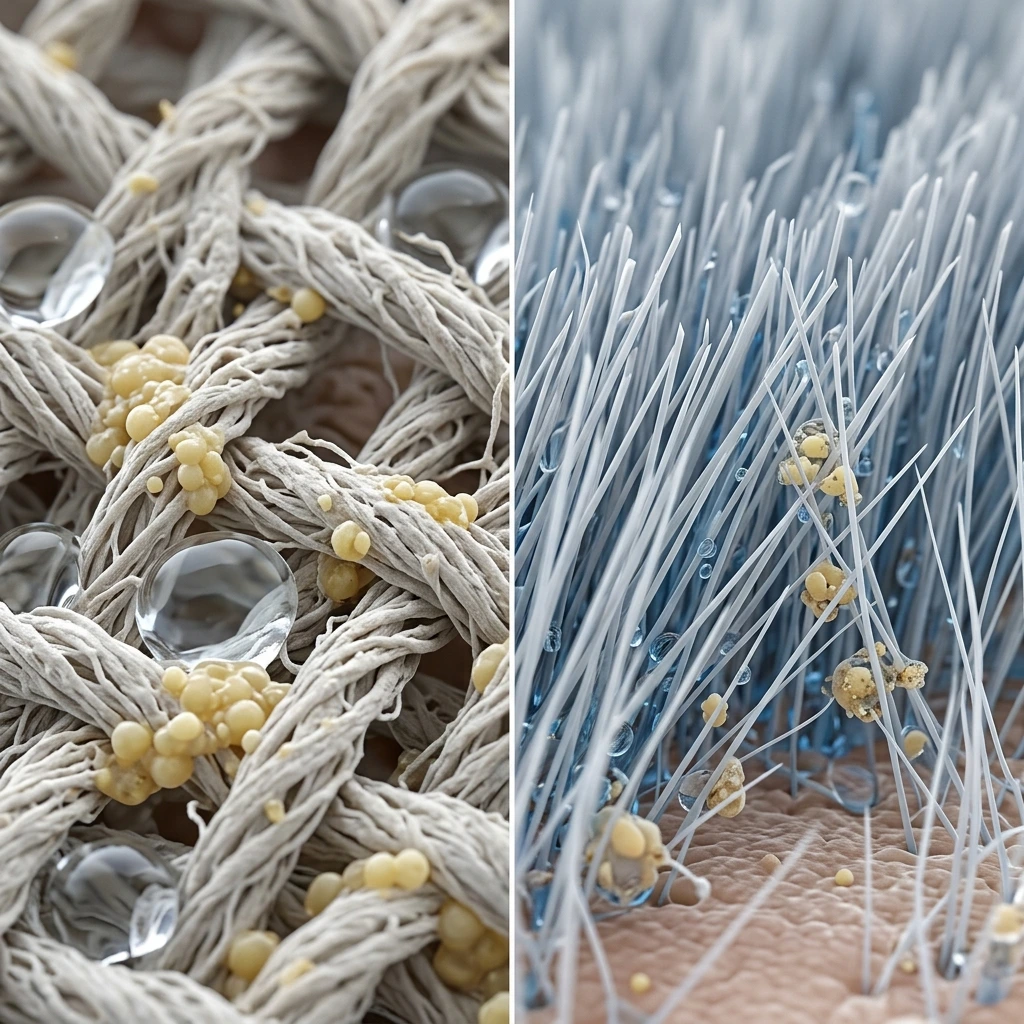
- Disposable Cotton: Short, coarse fibers create harsh mechanical friction when rubbed against sensitive facial skin, causing micro-abrasions, redness, and peeling.
- UpPoly Microfiber: Strands 100 times finer than a human hair glide effortlessly across pores, sweeping away impurities without scraping the delicate stratum corneum.
🧠 Eco-Skincare Knowledge Check
What is the main material used in conventional disposable makeup wipes?
Join the Movement Toward Conscious, Zero-Waste Beauty
Caring for your skin health should never come at the expense of our planet. By choosing reusable tools engineered with sustainable dermatological technology, you eliminate thousands of plastic waste items while restoring your skin barrier to its natural balance.
Upgrade your daily routine today with warm water and UpPoly technology, and lead the way toward truly clean beauty.